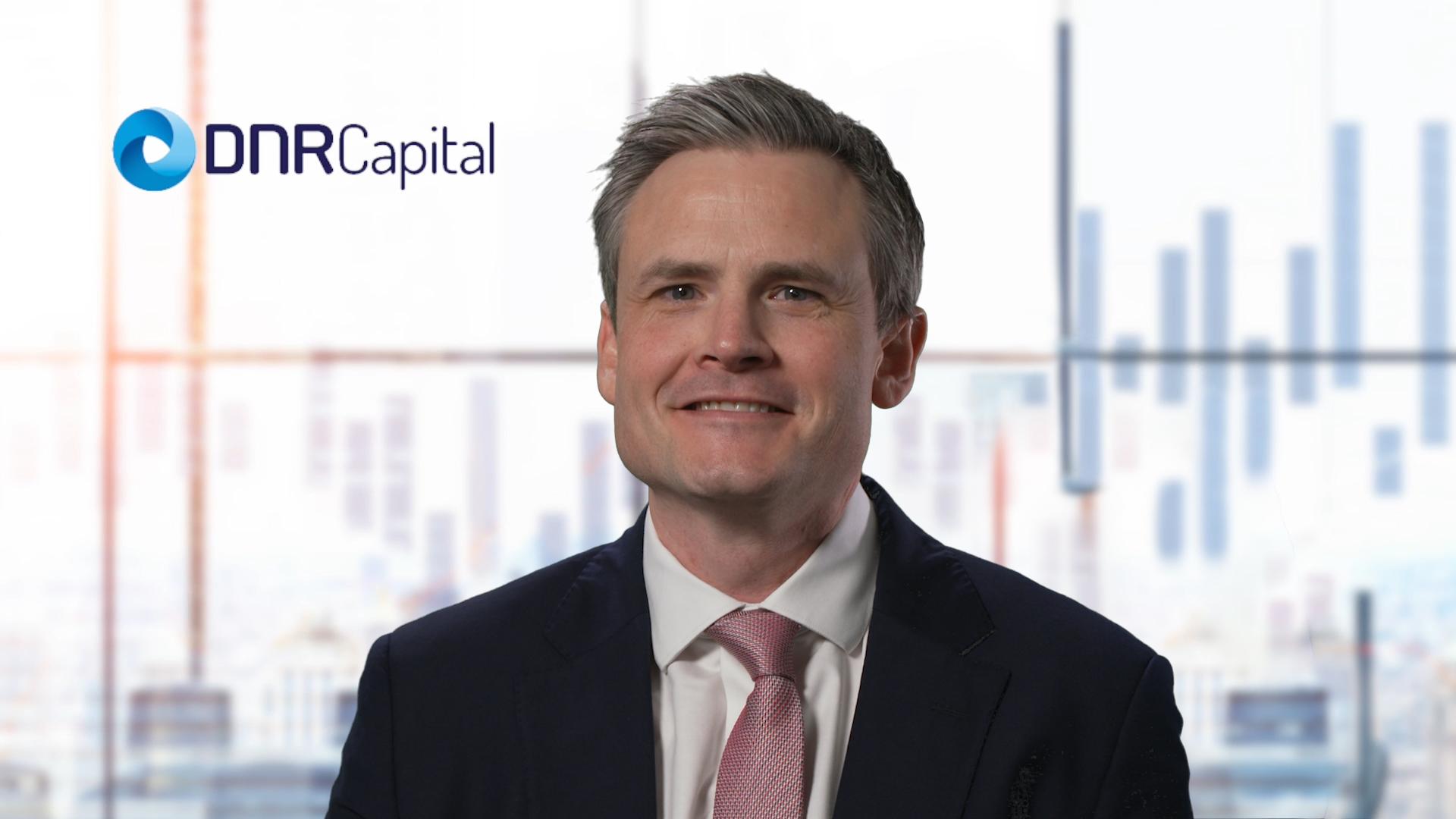

We recently sat down with Sam Twidale, Portfolio Manager for the DNR Capital Australian Emerging Companies Fund to get his thoughts on the recent reporting season and insights into the opportunities ahead for the Australian small cap sector.
So reviewing the calendar year so far and the recent reporting season, the key trend really has been this shift in market leadership that we’ve seen. This rotation under the surface out of some of the winners from last year in technology, software, consumer financials, into some of the more value areas of the market like commodities, materials, energy. And that’s played out quite well for our emerging companies fund. We’ve done a lot of repositioning in the portfolio. I think over the past year, we have seen a breakdown in valuation discipline. It’s been a bit of a growth bubble. Some of these companies reach very high valuations, that sort of price to perfection scenario, high valuation multiples, quite optimistic earnings expectations. You couldn’t really squeeze that much more. And we’ve seen this shift into these more value areas. What we’ve seen as well is a lot of concerns around AI.
It’s developing very quickly, evolves very rapidly, and that has the market questioning the barriers to entry or the competitive moats around some of these technologies, some of these software companies that could be under threat. And that’s causing quite a bit of turmoil in that part of the market. And again, given the repositioning that we’ve done in the portfolio, our portfolio’s played out quite well during this period. I think if we look at the backdrop for the material space in particular, we still remain very positive. And I think looking through the reporting season, it really just confirmed the thesis for us. Looking at the supply demand dynamics from a demand point of view, we’ve got a number of data points over the past month that the structurally growing demand that we’re seeing for a number of commodities really continues to play out. We saw a lot of these tech companies that are really transitioning from sort of this capital light to capital intensive business model announced quite significant CapEx plans for data centers.
That’s all very positive for a number of commodities, these critical minerals that will go into the data center build out. And we’re positioned quite well for that. You look at some of these minerals like lithium, rare earths, copper, aluminum, the energy that’s going to be required to power these data centers. We’re really seeing a structural uplift in the demand outlook for these commodities. We’re living in a very interesting world as well. A lot of geopolitical conflicts. The defense industry is getting a lot of investment. That’s positive for a number of commodities. And also this whole focus on self-sufficiency, deglobalization. Again, it’s raising the focus on commodities as being really a strategic allocation. You’ve got to make sure you’ve got that self-sufficiency in supply chain. So demand outlook looks very encouraging and we just continue to see that thesis play out. I think on the supply side as well, I think the market has been underestimating the replacement cost of a number of commodity producers.
We’ve seen a lot of inflation in this post- COVID environment, and its cost of developing new mines is likely to be much higher than the market really anticipates. And that really brings back the focus on existing producers with sunk assets, generating strong cash flows that have already put that investment into the ground. So we continue to like some of these commodity producers. We like some of these existing producers that were transitioning into production, position low down the cost curve, generating strong cash flows, in safe jurisdictions, management teams that are good allocators of capital. And across our portfolio, we have a number of commodities very diversified across lithium, rare earth, coal, uranium, copper, coal. So it’s quite diversified across a range of commodities. I think of some other highlights from reporting season as well, where some of these companies that provide equipment into the mining industry.
We’ve got a number of companies exposed to that. We’re seeing a real uplift in exploration activity. After some difficult years, and we look at companies like Index, a real standout result from the reporting season, very strong revenue growth, very strong EBITDA coming through. This is a company that provides specialized drilling equipment and technology to the mining industry, and we see them at the start of a multi-year recovery as we start seeing more investment come into the mining industry. Another one, Chrisos as well. Again, specialized technology for the mining industry for gold in particular, gold testing equipment. They’re really disrupting the industry, a global player. They reported very strong revenue growth, EBITDA growth. And again, we see them at the start of a multi-year growth story. So overall, when we look at the outlook for small caps and the market in general, we continue to like some of these more capital intensive businesses.
Over the last decade, it’s really been about investment in intangibles, software companies, technology, and some of these capital intensive businesses have been starved of capital. That’s really laying the seeds of the recovery that we’re seeing across multiple commodities. So the outlook looks really interesting and we continue to have key overweights there. But what we are seeing more in recent months is this sell off in growth, and that’s likely to present some opportunities. We’re seeing a lot of concerns around AI. We’re seeing a lot of us sort of indiscriminate sell off in lots of quality business models in the technology space, in financials consumer, and that’s likely to present opportunities. So although we have this overweight in some of these commodity producers, we’re actively hunting around for some of these quality names that could be being indiscriminately sold off and we’re certainly remaining opportunistic to some new opportunities to deploy capital into at this point in the cycle.
This video has been prepared and issued by DNR Capital Pty Ltd, AFS Representative – 294844 of DNR AFSL Pty Ltd ABN 39 118 946 400, AFSL 301658 as the investment manager of the DNR Capital Funds. The Trust Company (RE Services) Limited ABN 45 003 278 831 AFSL No 235150 (as part of the Perpetual Limited group of companies) is the responsible entity and issuer of units in DNR Capital Funds. It is general information only and is not intended to provide you with financial advice and has been prepared without taking into account your objectives, financial situation or needs. You should consider the product disclosure statement (PDS) for the relevant DNR Capital Fund, prior to making any investment decisions. The PDS and target market determination (TMD) can be obtained for free by calling DNR Capital on 07 3229 5531 or by visiting the Fund website dnrcapital.com.au/invest. If you require financial advice that takes into account your personal objectives, financial situation or needs, you should consult your licensed or authorised financial adviser. This information is only as current as the date indicated and may be superseded by subsequent market events or for other reasons. To the extent permitted by law, no liability is accepted for any loss or damage as a result of any reliance on this information. All investments contain risk and may lose value. Neither DNR Capital nor any company in the Perpetual Group (Perpetual Limited ABN 86 000 431 827 and its subsidiaries) guarantees the performance of any fund or the return of an investor’s capital. Neither DNR Capital nor Perpetual give any representation or warranty as to the reliability or accuracy of the information contained in this video. Total returns shown for the DNR Capital Funds are calculated using exit prices after considering all of Perpetual’s ongoing fees and assuming reinvestment of distributions. No allowance has been made for taxation. Past performance is not indicative of future performance.